
The Emotional Side of Career Transition: Career Grief
A career transition doesn’t just change what we do — it can also shift how we feel.
When a contract ends or a role comes to a close, the visible parts often move quickly. Plans are made, conversations happen, and attention turns toward what’s next. From the outside, it can look steady and practical. And yet, underneath, there can be something quieter at play — a sense of tenderness, uncertainty, or loss that doesn’t always have clear language.
This is often what career grief looks like.
It’s not simply about leaving a job. It’s about releasing a professional identity, a familiar rhythm, a way of contributing, or a version of ourselves that lived within that work. Whether a transition is chosen, unexpected, or somewhere in between, the emotional impact often arrives subtly — sometimes only after the logistics are handled and the focus has already shifted forward.
Writer and career expert Kathy Caprino speaks to this hidden emotional layer of professional change. Her work names something many people experience but rarely articulate: progress and loss can exist at the same time. Moving forward does not cancel out what mattered.
For many professionals, transitions naturally raise questions about identity and value. Who am I outside this role? Where does my contribution live now? Do my skills still translate in a different context? These are not signs of weakness — they are signs that the work held meaning.
There is often a physical dimension as well. Change can unsettle the nervous system, making it harder to feel grounded or steady for a period of time. Even when the mind understands the transition, the body may need space to catch up.
This is where the focus gently shifts from strategy to reflection. It becomes about acknowledging what has been left behind, recognizing what still endures, and reconnecting with the strengths, experience, and values that remain intact — regardless of title or organization.
I’ve moved through this kind of career grief myself. What helped wasn’t rushing to the next answer, but allowing space to name what was happening and treating that period with patience rather than pressure. From there, direction had room to re-emerge in a steadier way.
Career transitions are not only practical events. They are deeply human experiences. When we recognize that, we create the conditions for clearer choices, stronger self-trust, and a relationship with work that is grounded not just in achievement, but in respect for who we are.
If you find yourself in a transition that feels heavier than expected, you’re not alone. Sometimes the most productive step is simply allowing space to acknowledge the loss — and trusting that clarity tends to grow from there.
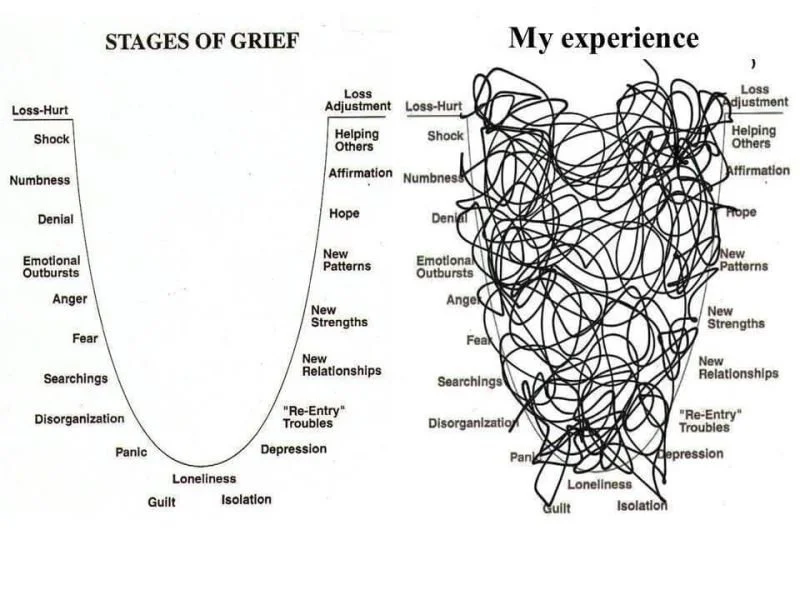
Image Credit: Sarah Johnson, www.thebriefcasecoach.com